

The "Servant Leader" Project
A DRAFT of the introduction, made possible through profound support from hundreds of the most incredible people I have had the honor of meeting. Please share your feedback below or contact Jonathan directly.
Intro: Who We Choose to Follow... and Why?
The 1932 Model A Ford chugged along on a winding road in the foothills of the Catskill Mountains. A long and growing line of cars followed impatiently behind. Uncle Bill had no intentions of speeding up. Neither did Henry – that was his car’s nickname. Both car and driver were thoroughly enjoying this casual Sunday drive. Only it wasn’t Sunday. And the dozens of cars stuck behind him had no interest in a casual scenic escapade. Uncle Bill’s wife elbowed him. Come on, Bill! They want you out of their way! Bill gave his best George Costanza smile: They’ll follow us. They don’t have much choice. Henry’s the lead car today!
You’ve been there. Stuck behind a leader. Wanting that leader out of the way. Not engaged in the journey. Not sure what options you have, other than simply endure the lack of progress. You’ve attended meetings where you wish someone else were in charge. You’ve had a boss who was a serious lid on potential – yours and the potential of the whole team. You’ve been there more times than you want to recollect… been part of a project, sat on a board, waited on a supplier, hired contractors, dropped off your car with a mechanic, waited at an airport terminal, dealt with poor customer service, observed a coach for a kids’ sporting event, perhaps planned a family event… and you felt stuck following someone else’s lead. You were definitively not following by choice.
We give certain people permission to deeply and profoundly influence our lives. We're not stuck behind them. On the contrary, we seek them out. We want their input. Who are these people? And why do we give them such permission? This book is the result of a quest that has been inspired and nudged along by many events. One of the earliest nudges came from my college basketball coach: When are you going to step up and lead this team? I froze and turned to look at coach. We locked eyes for longer than I was comfortable and coach’s intensity seared that message into my mind. Message delivered. He walked away. I was an 18-years-old college freshman. Our team was ranked #3 in the country for junior colleges. We had the talent to beat some Division I teams. Most of our players were there with one purpose: get the attention of a D-1 coach and transfer. Some had D-1 talent but not the grades. I had the grades, but no D-1 scholarship offers. We were in the middle of the season. Tough travel schedule. We had lost more than a few key players to academics and some criminal activities. None of this was new to our coach. He had an incredible record in his long coaching career and knew all too well that shaping character was one of the biggest challenges for a leader.
When are you going to step up and lead this team? I remember exactly where I was on the court when coach’s clear words and stare delivered that message. I went back to the drill with even more intensity. I heard his words. I gave a subtle but serious and firm nod. I committed to stepping up. To leading. But what did exactly did he mean? Score more? Pass more? Play more minutes? Did he want me to be a captain? Take more clutch shots when we needed a momentum shift? Lead the team. Wasn’t that his job? And wasn’t I already leading – by example? Not the leading scorer. Not the point guard. Not an official captain. But I was quite sure that I was leading by example. I wasn’t selfish. Showed up early for every single practice. Hit the weight room regularly and seriously. Knew the plays. Ran the plays. Worked out over Thanksgiving break when Coach told us to come back in better shape than when we left. I took it seriously. Didn’t stuff myself with stuffing. Ran every day over break. Got plenty of rest. Came back ready and when we ran our tails off in that first practice back, I was so ready. Most of my teammates were not.
...Step up and lead this team... What did he mean? I didn’t ask Coach, but definitely wrestled with that question. And tried to lead while I was trying to figure out what he meant by lead. That was one of the nudges for this quest. The quest: we give certain people permission to radically impact our lives. They affect us. They engage us. Their influence transforms us. Who are these people and why do we give that permission? How can you gain that type of influence? Coach didn’t need me to score more points. Or show up earlier. Or hit the weight room even more. He was asking me to influence my teammates. And I had no idea how to do that. I played to win, not to have a season high in points for a D-1 scout. I found the open shooter instead of forcing a highlight reel shot. I guarded whoever the team needed me to guard, not the player who would make me look good or give me a rest. Coach wasn’t asking me to change those things. He was asking me to influence my teammates. To gain permission from my teammates to have influence in their lives. It didn’t work out that season, but isn’t that how quests often begin?
The quest isn’t over, but here we are at a midway point. For years now, I’ve sought these people out. Met them. Observed them. Read about them. Asked their friends, family, co-workers about them. I’ve also interviewed hundreds of people who do what we describe throughout this book. They get permission to dramatically influence others. They are CEO’s, parents, business owners, coaches, teachers, grandparents, community leaders. Dozens of their stories are included. They are uncommon. They won’t say that, but the people around them will. They are most definitely uncommon, but what – if anything – do they have in common? I discovered four choices. The choices slowly cement into habits, character and culture. Culture is a fancy way of saying character at scale. At the core, character and culture are repeated choices. Eventually, we use the phrase: "That's who they are." A more accurate description: "That's who they choose to be, repeatedly." Even the most incredible leaders we interviewed still admit that they don’t always make these four choices. The four choices can be learned and practiced. Most of us make a few of these four choices, at least under certain circumstances and with certain people. And we don’t make one of the choices, or at least don’t exercise that choice so well in certain circumstances and with certain people. How do these uncommon leaders make these choices? And why? Who and what influenced them? What were some of the game-changers in their lives? How do they build those choices into habit, character and culture? How do they lead? How do they parent? What can we learn from these ordinary heroes?
The businesses they build, teams they coach, families they raise, churches, schools and communities they affect... You walk in the door and can tell almost immediately. The culture, level of service, customer experience, effort, attitude, ownership, expectations. The love. They are CEO’s, teachers, coaches, non-profit leaders, front-line supervisors. We’ve been interviewing some of the most captivating leaders you can imagine, including Patch Adams and a great-grandson of the Mayo Clinic founder. A snapshot of who you will meet in this book:
Jim quit his job and today, he spends a lot of time in and out of prison... visiting prisoners. When he quit his job, he spent a summer with Mother Teresa and then returned home to become CEO of several companies. He has since started orphanages in Guatemala. He was not a servant leader by birth. He allowed some experiences and Mother Teresa’s “performance review” to change him.
Mimi helped 25,000 people recover from drug addiction and a life in and out of prison. She leads one of the world’s most successful non-profits and leaves a ripple effect on every person who crosses her path.
Lynn lost her teenage son in a boating accident. She channeled the massive and heart-wrenching pain from that loss into a way to serve other parents who lost a child and young kids who lost a sibling. Parents and kids told me that she saved their lives, their marriages, their families. Gave them hope. Gave them a reason to get up in the morning. Gave them something they didn't think they could ever have again.
Sally donated her kidney to another hockey mom. They barely knew each other, but as soon as Sally found out that another mom needed a kidney, she asked to see if their blood types matched. Sally’s grandfather won an Olympic gold medal with the original Miracle on Ice hockey team in 1960. Remember Herb Brooks?
Patch mentored Robin Williams to play his role in the incredible movie. He told me something that I don’t think I’ll ever forget. It shapes businesses, families, cultures, the world. Patch put it so simply and repeated it many times in our long conversation. He was right and his advice is one of the reasons this book exists in this format.
How do these “Servant Leaders” do it? And why?
Let me go back to Henry and Uncle Bill for a moment. We know that we’ve been stuck behind a proverbial classic Model A Ford many times. We may be less aware of the times when we are Henry and Uncle Bill. Frustrated people are just hoping we’ll pull over and let them pass. Robert Frost gave me some great advice on this topic. He said, “Jonathan, how many things have to happen to you before something occurs to you?” Not the most comfortable question. He also didn’t use my name or say it directly to me. Frost was dead before I was born. But he did write that question. Let me ask you: How many things have to happen to you before something occurs to you?
This will not be your first introduction to these four choices. Perhaps you are pretty good at them. Most likely, you’re good at some of them – some of the time. One of the most amazing lessons from all these interviews: good is the enemy of great. These leaders don’t arrive. They stay hungry and humble. Those two traits fit within the four choices. Cultures that nurture these 4 choices change lives and create a ripple effect emanating from those lives out into families and communities. Are you ready to dive in? Are you sure?
Uncommon Leaders. Uncommon Cultures. Uncommon Parents. Uncommon Impact. Uncommon Lives! Welcome to the SERVANT LEADER project!
About Jonathan Fanning
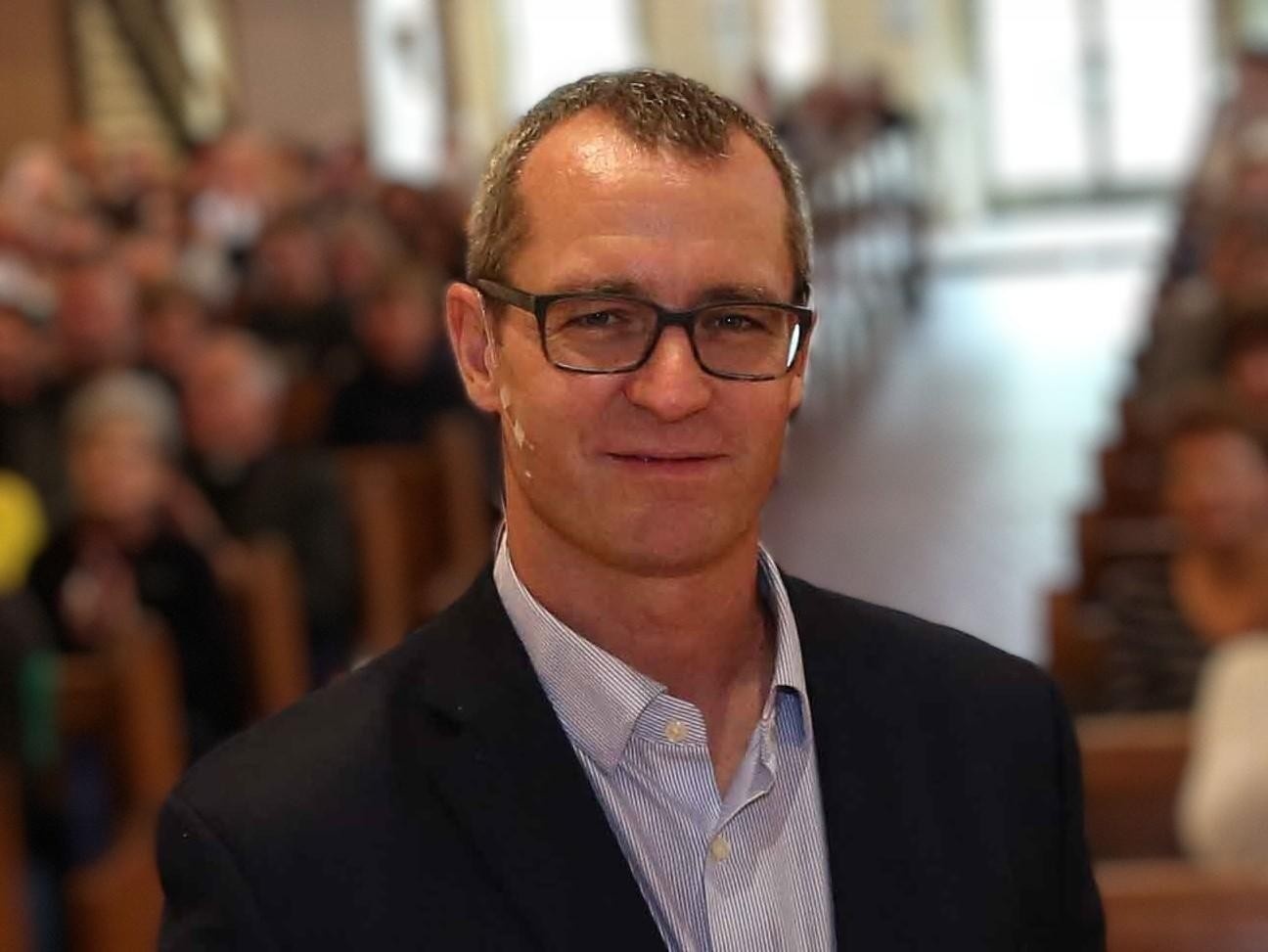
Jonathan Fanning is the founder of the Who are you BECOMING Institute, an internationally renowned leadership expert and author of:
- Who are you BECOMING?
- Creativity Unleashed
- The Servant Leader Paradox (coming soon)
- I Once Was Lost
- Conversations with the Monk
Jonathan has been helping leaders to find and implement game-changers for over 20 years, has delivered over 500 keynotes around the world and his TEDx Talk was voted "best of the conference!"
He has also built several successful businesses, including a national children’s fitness franchise and Entrepreneur Adventure, to help young people experience business start-up and ownership.
Jonathan brings his amazing gift of combining story-telling, humor, emotion, and tough questions to his acclaimed keynotes, workshops, leadership retreats, and coaching programs.

Have you ever had a wake-up call? What I like to call a "frying pan" moment? When you realize something is wrong, broken, not working as well as it could or should?
Two tractor trailers played hockey with my car on the highway. Warm day, cold night, black ice.
When I regained consciousness, I saw a line of cars heading towards me at highway speeds. Get out of the car and off the road! I almost jumped the guardrail and off the bridge...
Keynotes - Workshops - Coaching Programs
Are you ready for a game-changer? Are you sure?
- Creativity Unleashed [5 Habits of World-Class Innovators] Are you and your organization becoming more - or less - creative? "Einstein's Hour" and the “Innovator’s Equation” are among the many game-changers we'll explore. Voted best talk at a TEDx conference, incredibly popular leadership coaching program & the topic of Jonathan's latest book!
- Who are you BECOMING? [Game-Changers for Leadership, Culture & Life] Topic of Jonathan's best-selling book and most popular leadership development coaching program. A year from now, you’ll be a better leader, parent, person -more courageous, caring, focused, patient, humble, passionate, effective... or not. Discover the "Simplest and Most Effective Leadership Development Plan!"
- Building Emotional Intelligence [A Practical Blueprint with Ripple Effects in Every Aspect of Life] Emotions are contagious... and affect everything. Are yours worth spreading? Discover a powerful framework to take your Emotional Intelligence to the next level.
- The Servant Leader Paradox [4 Uncommon Choices of Leaders We CHOOSE to Follow & Cultures We CHOOSE to Join] Every leader is an agent of change… for better or for worse! What separates those we choose to follow from those we follow simply because we "have" to? 4 Essential (and Paradoxical) Habits that change your world!
Warning...This experience may change the way you see the world and your role in it!
Contact Us!